What Is The Difference Between A Gondola And A Cable Car?
A clear explanation of gondola versus cable car, aerial tramway, funicular and chairlift, using Taipei's Maokong Gondola as the worked example.
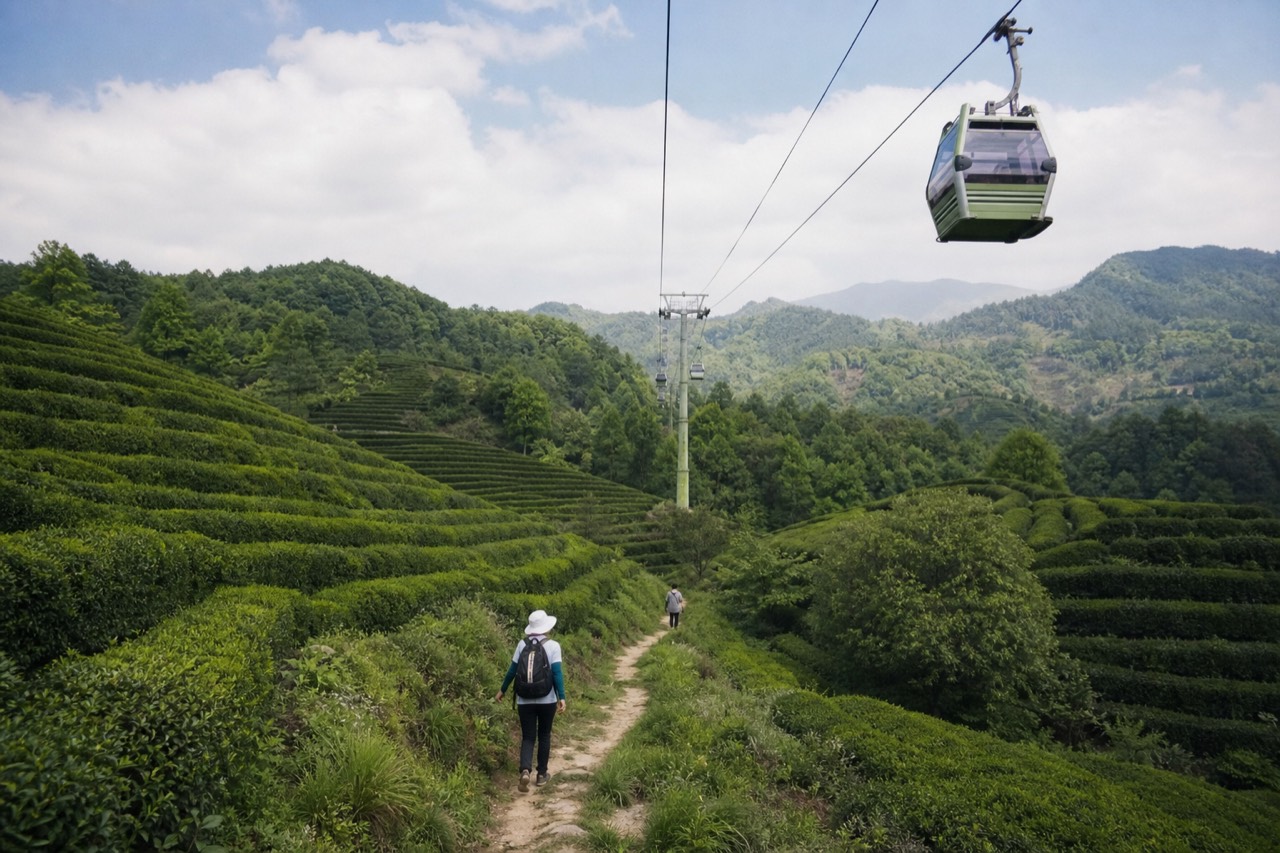
Two words, one hillside, and a surprising amount of confusion. Almost every visitor to Taipei ends up asking this question, because the city's own marketing material calls the Maokong line a "gondola" while plenty of English travel content calls the very same system a "cable car". Both are right, in their way. The machine climbing from Taipei Zoo to the tea hills of Maokong is a specific type of cable-drawn transport, and the distinction is genuinely interesting once you see it up close.
What Is The Difference Between A Gondola And A Cable Car?
A cable car is any transport system that moves vehicles along a fixed cable, so the term covers several very different machines. A gondola is one specific type: a continuously circulating loop of small cabins, each clamped onto a moving haul rope by a grip that releases inside stations. The Maokong line is a monocable automatic-circulating detachable gondola, which is why its cabins never stop coming and there is no timetable at all.
The clean way to think about it is genus and species. "Cable car" is the genus. "Gondola" is one species within it. When engineers say "gondola" they mean a detachable circulating system like Maokong: many small cabins on an endlessly moving rope, spaced seconds apart, each one detaching from the rope to crawl slowly through a station while people board, then re-gripping and accelerating away.
When engineers say "cable car" in the narrower North American sense, or "aerial tramway" in the international one, they usually mean the opposite arrangement: two large cabins permanently fixed to the rope, one going up while the other comes down, alternating like a pendulum. The famous San Francisco street cable cars are a third thing entirely, ground-level rail cars pulled by a cable running in a slot beneath the street.
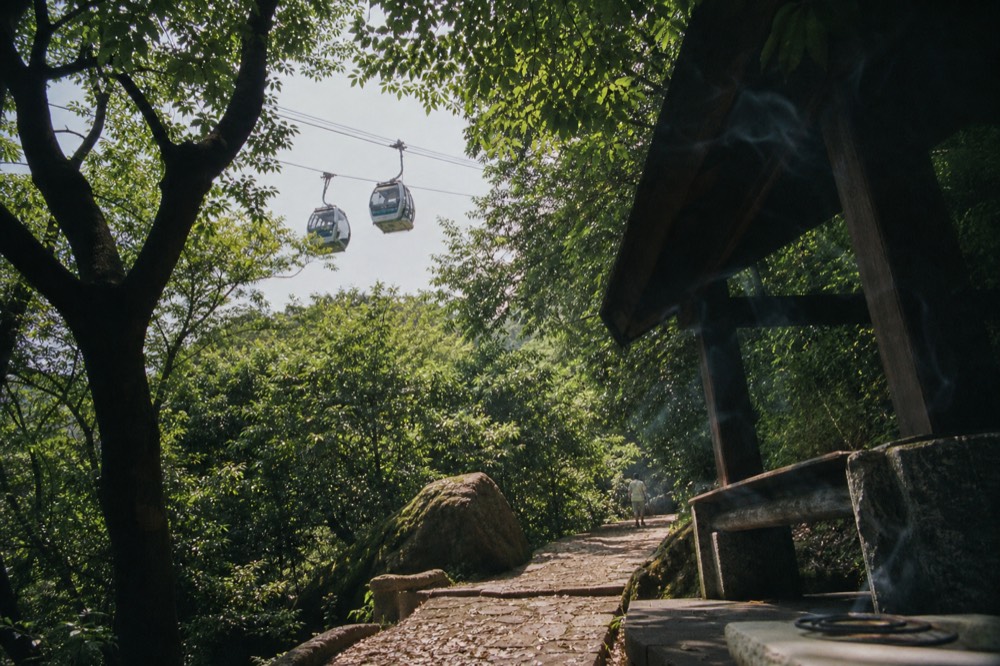
The confusion is not an English-only problem. In Chinese, the Maokong system is called a 纜車 (lǎnchē), literally "cable car", and that is the everyday word Mandarin speakers use for any ropeway, chairlift, tramway or gondola. When the operator translated its own name into English it chose "gondola", which is the technically precise term, while casual translation of 纜車 gives "cable car". So both names for the Taipei system trace back to the same source, and neither is wrong. For a deeper look at how Chinese and English ropeway vocabulary maps onto each other, see the companion piece on cable car systems across Taiwan.
How Does A Detachable Gondola Actually Work?
Every cabin on the Maokong line has no motor of its own, none whatsoever. A grip mechanism clamps each cabin onto a haul rope that never stops moving, and that grip opens automatically inside each station, letting the cabin detach and crawl along the station track at boarding speed while the rope carries on without it. Taipei Rapid Transit Corporation's own analogy is the conveyor belt in a Sushi Express shop.
That sushi belt comparison is better than it first sounds. In a Sushi Express restaurant, plates circulate endlessly past your table. When you want one, you take it off the belt; the belt itself never pauses. A gondola station works the same way in reverse. The rope is the belt, running at full speed, up to 5 metres per second at the top end of the operating range and a designed maximum of 6 m/s. The cabin is the plate. Inside the station, grip-force sensors test every cabin's hold on the rope as it passes through, a detail the operator publishes openly on its safety pages.
Because the cabin detaches, passengers board from a nearly stationary platform, which is why prams, wheelchairs and small children can all use the system safely. The operator can even slow or stop the cabin movement entirely for a wheelchair passenger to board, since the station track is independent of the rope. Once the cabin leaves the far side of the station, the grip closes onto the rope again and it accelerates back to line speed. The whole cycle happens dozens of times per hour at each of the four passenger stations, and no passenger ever notices the engineering happening under their feet.
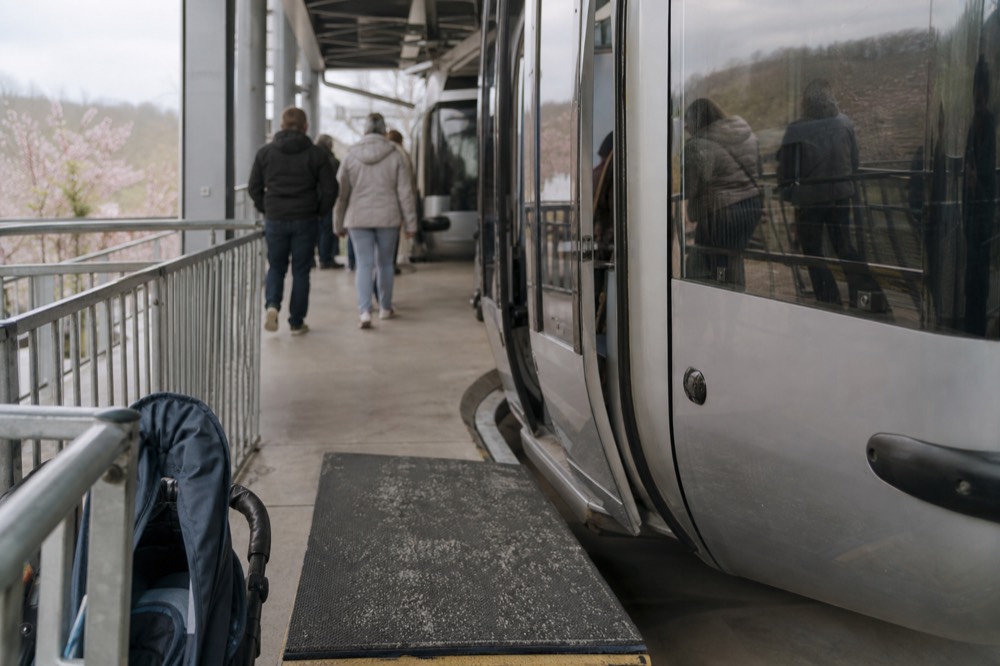
This is also why the line runs anti-clockwise and why there is genuinely no timetable. Cabins circulate in one continuous loop, roughly one crystal cabin passing every 2 to 4 minutes and regular cabins far more frequently. You do not wait for a departure. You walk up and get in the queue for the next cabin that has space. It is a strange feeling the first time, standing on a platform with no departure board and no announcement, watching cabins glide in one after another like plates on a belt.
How Does A Gondola Compare With An Aerial Tramway, Funicular Or Chairlift?
An aerial tramway runs two large cabins fixed to the rope, alternating directions, and can carry far more people per cabin but only in scheduled swings. A funicular runs on the ground on rails, hauled by a cable between two stations. A chairlift is an open-air circulating system like a gondola but with detached seats instead of enclosed cabins. A detachable gondola trades cabin size for frequency, and that trade is the whole point.
The table below sets out the four systems side by side, with the Maokong line's own figures filling the gondola column.
| System | Vehicles on the rope | Circulates continuously? | Typical cabin size | Wait between rides |
|---|---|---|---|---|
| Detachable gondola (Maokong) | 147 cabins, including 31 crystal cabins | Yes, no timetable | 8 passengers regular, 5 crystal | Seconds to minutes |
| Aerial tramway | 2 large cabins, counterbalanced | No, alternating swings | 40 to 100+ passengers | Several minutes per departure |
| Funicular | 1 or 2 rail cars on the ground | No | 30 to 100+ passengers | Timetabled |
| Chairlift | Many open chairs | Yes | 2 to 6 seats | Seconds to minutes |
The tramway's weakness is not capacity per cabin, it is capacity per hour. A tramway cabin might hold 60 people, but if the rope takes four minutes to travel each way, the maximum throughput is one cabin arrival every four minutes in each direction. A gondola arrives with 8 seats every few seconds. Multiply it out and the Maokong system's maximum one-way throughput is 2,400 passengers per hour, which is why a hillside attraction that has carried more than 40 million riders since 2007 chose this design rather than a big pendulum tram.
The funicular is the odd one out geographically rather than mechanically. It is a ground vehicle, so it needs a cleared right of way, tunnels or a straight hillside, and it serves a fixed pair of endpoints rather than a chain of stations. Maokong's route, roughly shaped like the numeral 7 according to the operator's own description, bends at two closed angle stations, something a funicular could never do and a tramway would struggle with. The 4.033 km route is served by six stations in total, four open to passengers and two angle stations closed to the public, which exist for power control and for bending the route. The drive machinery sits on an elevated platform above the platform level of Angle Station 2.
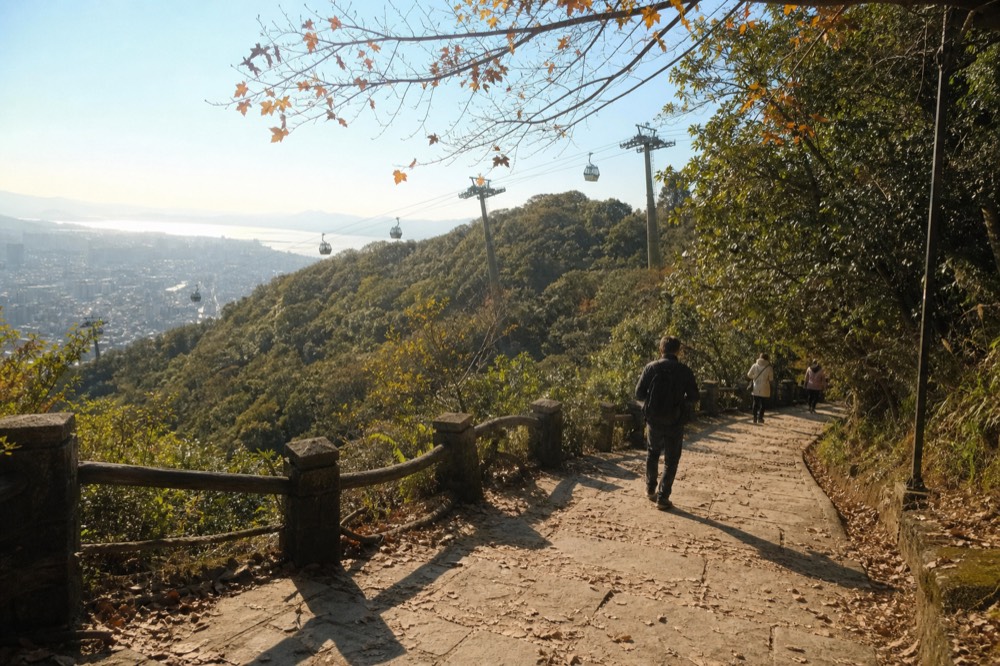
The chairlift, meanwhile, is the gondola's close cousin: same circulating principle, same detachable grip technology in modern installations, but open to the sky. Ski resorts use chairlifts because skiers want to ride with equipment on and hop off quickly. A subtropical city serving families, elderly visitors and tea-drinking day trippers wants enclosed, weather-protected cabins, which is exactly what Maokong runs. Rain in Taipei's hills is common enough that an open chair would empty the hillside for a third of the year.
Why Does Cabin Size Decide How Many People The System Moves?
Because throughput is cabin capacity multiplied by arrival frequency, and a detachable gondola wins on frequency so overwhelmingly that small cabins beat big ones. The Maokong fleet of 147 cabins moves up to 2,400 passengers per hour per direction, while regular cabins hold 8 people and crystal cabins only 5, the lower limit existing because the reinforced-glass floor alone weighs over 200 kg.
The crystal cabin capacity deserves a pause. The "Eyes of Maokong" cabins have their floor replaced with three layers of reinforced glass, about 48 mm thick in total and roughly 213 kg, CE certified and installed under the direction of technicians from SIGMA, the French cabin manufacturer within the POMA group. That floor mass eats into the 400 kg maximum load, which is why five passengers fit where eight would fit in a regular cabin with a 640 kg limit.
There is a queue consequence too, and it is arithmetic rather than opinion. Only 31 of the 147 cabins are crystal cabins, so roughly one cabin in five is crystal, carrying five seats instead of eight. One crystal cabin passes roughly every 2 to 4 minutes. Visitor reports describe crystal cabin waits exceeding 30 minutes on weekend afternoons, while regular cabin queues run much shorter, and the operator publishes no live wait indicator anywhere, so the online booking system it has run since December 2011 is the real mechanism for skipping the crystal line: you enter at an appointed time slot instead of queuing. The full lowdown on the glass-floor cabins, including the on-site NT$50 per person per trip surcharge, sits in the crystal cabin guide.
The base fare picture matters here as well: a single journey in a regular cabin is a flat NT$180 regardless of distance, and the one-day pass is NT$300, a structure that replaced the old station-count scale in March 2025. If you plan to ride up, walk a trail, ride back down and then go up again for the sunset view, the day pass arithmetic works itself out very quickly.
Why Does This Matter To You As A Rider?
Because the design explains both the best and the worst of the experience. The best: you never check a timetable, because cabins arrive continuously and you simply queue for the next one. The worst: the whole line is one machine, so when wind, lightning or an earthquake stops the rope, everything stops at once, and passengers already at the upper stations are brought back down the mountain by free shuttle buses.
The suspension rules are published and specific. Service halts when gusts reach 16 m/s and hold for more than 3 seconds, or exceed 18 m/s, when any lightning strikes along the route, when shaking reaches intensity 4, or when a typhoon land warning covers Taipei. After lightning, the system restarts once 30 minutes pass with no further strikes in the warning zone, then after inspection. A tramway would face the same weather, but its two-cabin design means a stoppage strands one full cabin of people mid-span. A circulating gondola can set each detached cabin down at the nearest station one by one, which is why the evacuation procedure works the way it does.
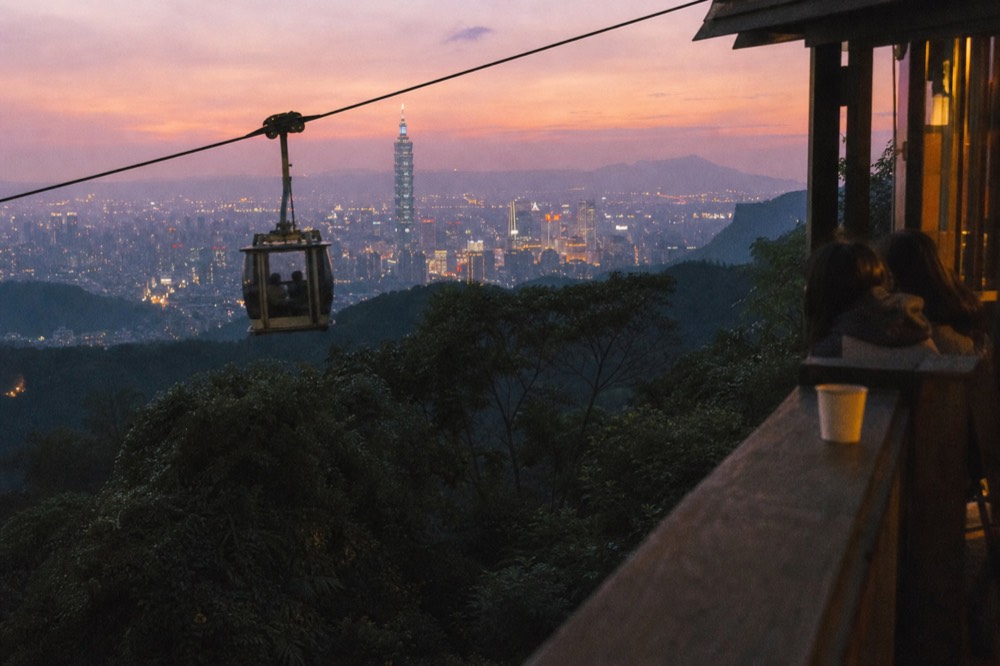
The single-machine character also explains the maintenance calendar. The line closes most Mondays for routine work, and 2026 brought a five-day cable-splicing shutdown from 20 to 24 April and a three-week annual overhaul from 8 to 28 June, after which the system reopened on 29 June. During closures, buses BR15, S10 and the Maokong Tour Bus Left Line cover the hillside instead, and gondola ticket holders can ride the Maokong Right Line and Left Line tour buses free on the same day. The weather and suspensions guide tracks the full rules.
For the practical rider, the terminology debate settles into one useful sentence: the thing gliding above Taipei's southern hills is a detachable circulating gondola, one of the several machines English speakers loosely call a cable car, and its design is why the ride feels like stepping onto a conveyor belt rather than waiting for a train. The Maokong Gondola site covers each station, fare and trail in detail, and the one-day pass that unlocks unlimited rides across all four passenger stations is the natural ticket for a day built around that conveyor belt.
Whichever option suits your itinerary, the base pass, the zoo combo or one of the experience bundles, the underlying ride is the same machine described above, and the same continuous loop of cabins will be waiting at the station when you arrive.
The short answers below cover the core distinctions: a cable car is the broad family name, a gondola is the continuously circulating species, and the Maokong line is the worked example of the detachable type. Each answer keeps to the published figures, from the 147-cabin fleet to the 2,400 passengers per hour throughput.
Common Questions About Gondolas And Cable Cars
What Is The Difference Between A Gondola And A Cable Car?
A cable car is a general term for any vehicle hauled by a cable. A gondola is a specific type: a continuously circulating loop of small cabins, each clamped to a moving haul rope by a grip that releases inside stations. The Maokong line is a monocable automatic-circulating detachable gondola.
Is The Maokong Gondola A Cable Car?
Yes, in the broad sense. In Chinese it is called a lanche, literally "cable car", and that everyday word covers chairlifts, tramways and gondolas alike. In precise English engineering terms it is a detachable gondola, which is the name the operator uses in English.
Why Do The Cabins Never Stop Coming?
The haul rope moves continuously and the cabins circulate in an endless anti-clockwise loop. Each cabin detaches from the rope inside a station and crawls along the station track while passengers board, then re-grips and accelerates back to line speed. There is no timetable because there is no departure to wait for.
How Many People Fit In One Cabin?
Regular cabins hold a maximum of 8 passengers with a 640 kg limit. Crystal cabins hold a maximum of 5 passengers with a 400 kg limit, because the reinforced-glass floor alone weighs over 200 kg.
What Happens If The System Stops While I Am On It?
Cabins already on the rope are set down at the nearest safe station and the line is cleared. Passengers stranded at the upper stations are taken back down the mountain by free shuttle buses, a published procedure the operator runs for weather and other suspensions.