Maokong Cable Car Stations And Route Map: Every Stop Explained
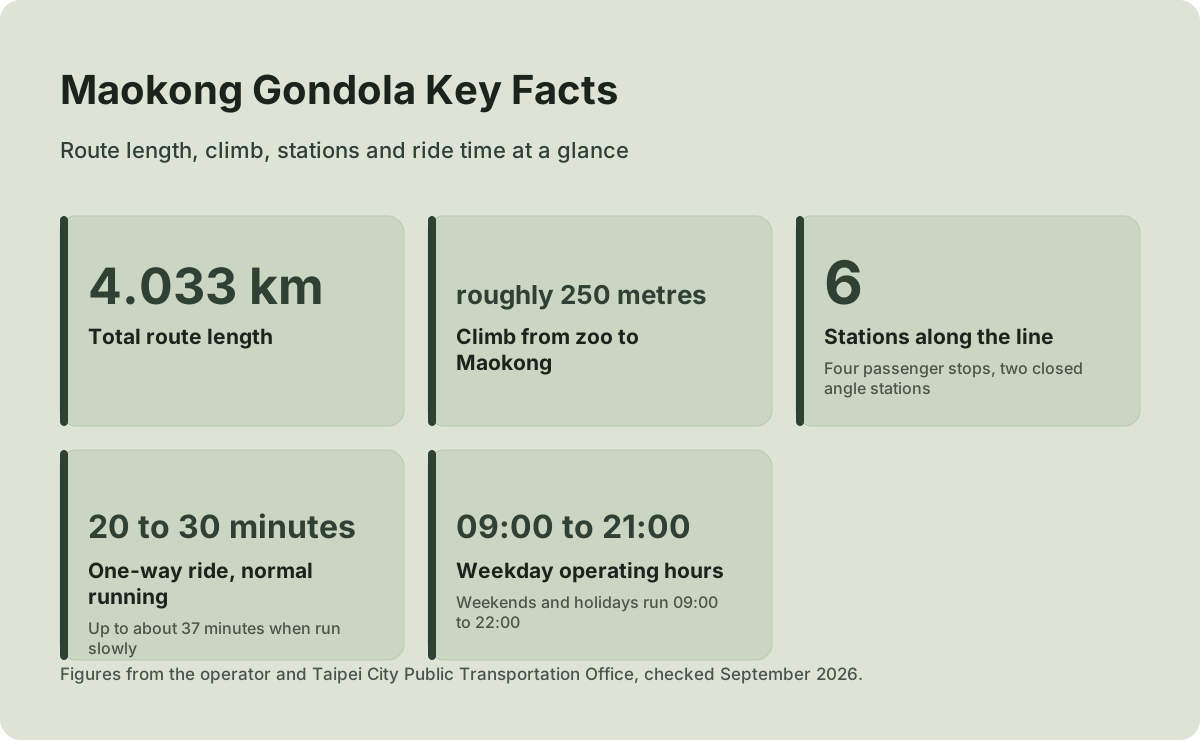
The Maokong Gondola runs 4.033 km from Taipei Zoo up to the tea hills of Maokong, through four passenger stations and past two angle stations almost nobody mentions. Here is the route as it actually is, not as most guides draw it.
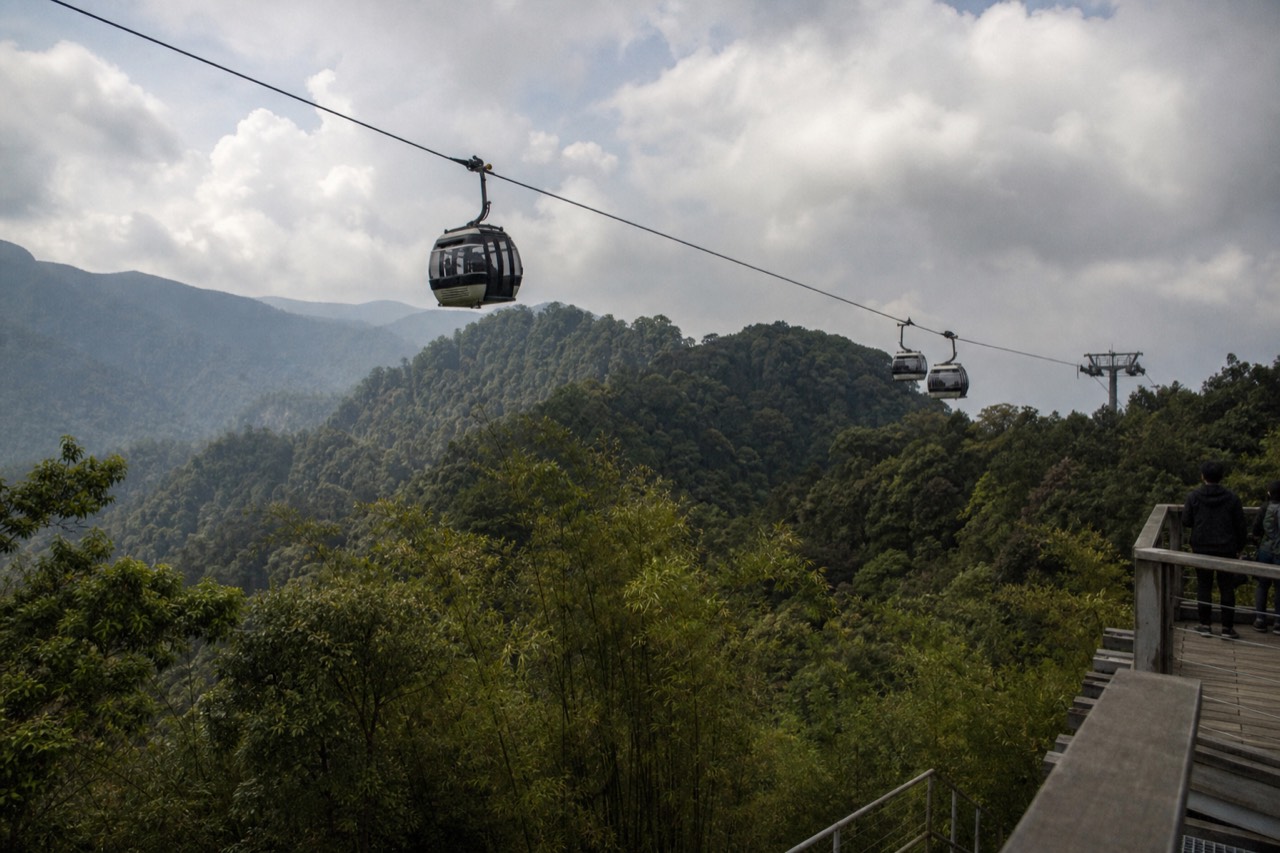
Short answer
The Maokong Gondola has four passenger stations: Taipei Zoo, Taipei Zoo South, Zhinan Temple and Maokong, plus two closed angle stations where the line changes direction. The full ride covers 4.033 km and takes about 20 to 30 minutes, up to roughly 37 minutes in slow running. A one-day pass costs NT$300 and covers unlimited rides.
The Maokong Gondola stretches 4.033 km from the edge of Taipei Zoo up into the tea-growing hills of Maokong, and the operator describes its shape as roughly the numeral 7. Six stations stand along that line: four where passengers can board, and two closed angle stations that exist purely to bend the route and house the drive machinery. Most route maps you will find online get the geometry wrong, and that error changes how people plan their day, because they expect a turn and a view change at Zhinan Temple when the real turn happens earlier. This page walks the line station by station, with what is genuinely worth leaving the cabin for at each stop. For the full picture of the system, including tickets and timing, start with Maokong Gondola and its planning guides.
What Are The Maokong Cable Car Stations, In Order?
The four passenger stations, in order from bottom to top, are Taipei Zoo Station, Taipei Zoo South Station, Zhinan Temple Station and Maokong Station. Between them sit two angle stations, Angle Station 1 and Angle Station 2, which are closed to the public and exist to bend the route and control power. The full physical order is therefore Taipei Zoo, Angle Station 1, Taipei Zoo South, Angle Station 2, Zhinan Temple, Maokong.
The route was built this way because the mountain does not cooperate with straight lines. Taipei City's Public Transportation Office, which planned the system, notes that Maokong's roads are narrow farm tracks with severely insufficient parking, and the gondola was built expressly to relieve the holiday congestion those roads caused. The line climbs roughly 250 metres over its length, from the zoo at the bottom to the tea terraces at the top.
It is a monocable automatic-circulating system, built by POMA of France. Cabins have no motor of their own: a grip clamps each one to a continuously moving haul rope and releases inside each station. The operator's own analogy is that it works like the conveyor belt in a Sushi Express shop. Cabins circulate anti-clockwise, and there is no timetable, they simply keep coming.
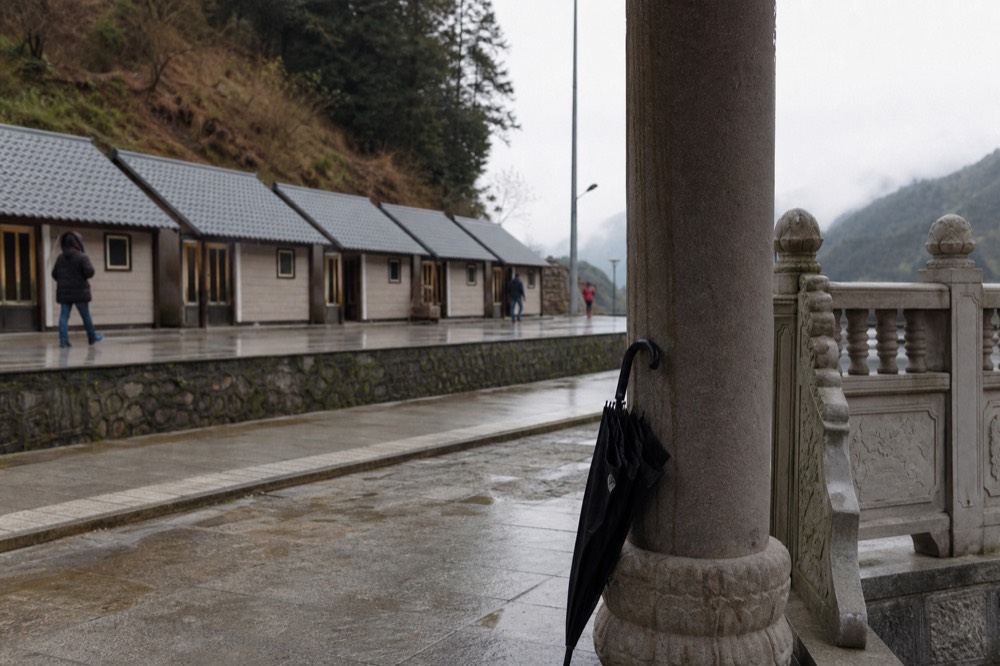
One practical point before the stop-by-stop detail: you must get off at a terminal station, Taipei Zoo or Maokong, unless you hold a one-day pass. A single-journey ticket ends when you exit. One-day-pass holders who exit at Taipei Zoo Station must hand the ticket to staff and get it stamped for re-entry, which is the mechanism that makes hopping off at Zhinan Temple mid-route possible.
| Position | Station | Passenger stop? | What it is for |
|---|---|---|---|
| 1 | Taipei Zoo Station | Yes | Lower terminus, next to Taipei Zoo, rotary platform |
| 2 | Angle Station 1 | No | Bends the route between the zoo stations |
| 3 | Taipei Zoo South Station | Yes | Serves the zoo's inner grounds, lateral platform |
| 4 | Angle Station 2 | No | Bends the route; drive system sits on a platform above it |
| 5 | Zhinan Temple Station | Yes | Serves Zhinan Temple, lateral platform |
| 6 | Maokong Station | Yes | Upper terminus, tea houses and trails, rotary platform |
Where Does The Maokong Cable Car Route Actually Turn?
The turn is not at Zhinan Temple, despite near-universal belief that it is. The line changes direction at the two closed angle stations: the first between Taipei Zoo Station and Taipei Zoo South Station, and the second between Taipei Zoo South and Zhinan Temple. The operator states plainly that the angle stations exist for power control and for bending the route, and the drive system sits on an elevated platform above Angle Station 2.
This matters more than it sounds. If you are watching for the view to swing because you think Zhinan Temple is the corner, you will miss the real turn, which happens before you ever reach the temple station. The 7-shaped route bends twice, and both bends are silent, unstaffed structures you glide past without stopping. Twenty-five pier foundations carry 47 tower columns along the line, and the towers thread the cabins between them through each bend.
POMA, the manufacturer, described the result as five successive sections on one ticket, calling it unique in the world. That is the engineering reason the angle stations exist at all: a line this long with this much vertical change cannot be driven as a single straight section, so it is broken into back-to-back segments with the machinery distributed along it.
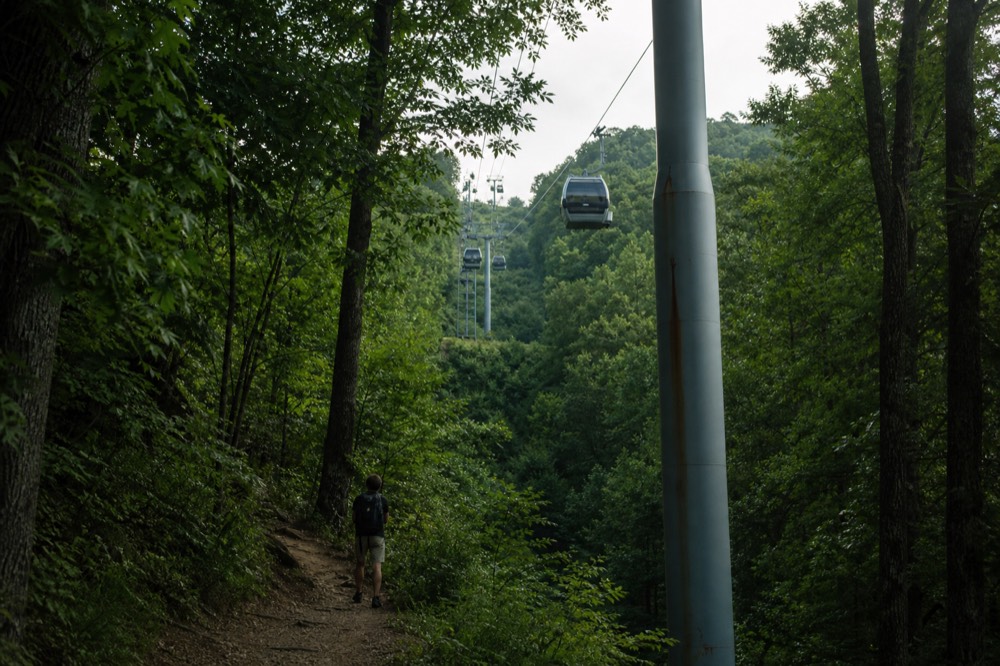
If you want to see the bend for yourself, watch the right side of the cabin on the stretch after Taipei Zoo South Station. The cabins slow through the angle stations as the rope guides them around the corner, and you can look straight down at Angle Station 2's platform and the drive equipment mounted above it. It is one of the more interesting seconds of the ride, and almost nobody knows to look for it.
The stop-by-stop detail below assumes you are riding up from the bottom, which is how nearly everyone rides it. If you are planning which ticket to hold for a day of hopping on and off, the options below cover the whole line.
How Long Does The Full Ride Take?
The ride from Taipei Zoo Station to Maokong Station takes about 20 to 30 minutes depending on the speed the system is running that day, and up to roughly 37 minutes when the line is run slowly. The design maximum speed is 6 m/s, but actual operating speed runs between 3 and 5 m/s, and the system drops further when conditions or boarding needs require it. There is no timetable because cabins circulate continuously.
The wide range surprises people who expect a cable car to run at one fixed pace. TRTC's own technical material gives about 17 minutes one way at full 5 m/s running, while the slower figure covers reduced-speed operation. Wheelchair boarding is one reason the system slows: station staff can slow or stop the cabins entirely to let a wheelchair passenger board safely, which is worth knowing if you are travelling with someone who needs it.
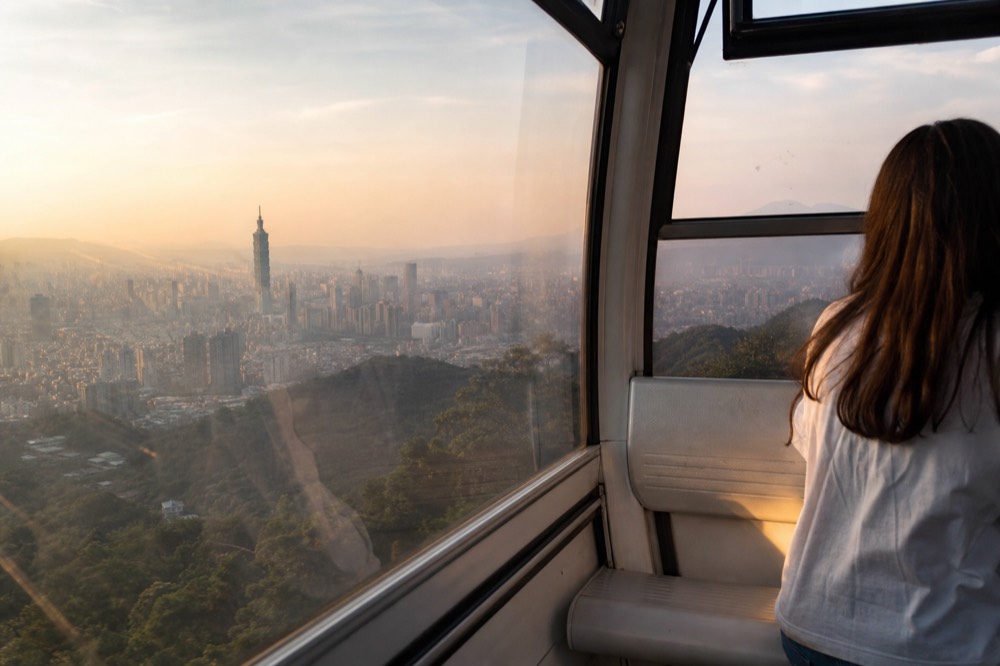
For planning purposes, treat the one-way ride as half an hour and build your day around that. The system runs weekdays 09:00 to 21:00 and weekends and public holidays 09:00 to 22:00, with hours flexing for festivals and weather. The operator publishes no last-boarding time, so arrive well before closing rather than racing the clock.
| Scenario | Realistic time budget |
|---|---|
| One-way ride, normal running | About 20 to 30 minutes |
| One-way ride, slow running | Up to about 37 minutes |
| Hop off at Zhinan Temple, look around, reboard | Add 45 to 90 minutes |
| Hop off at Taipei Zoo South for the zoo | Add 2 to 4 hours |
| Full day, all four stations | Roughly 5 to 7 hours |
The ride time question is a common one. The short version for route planning: the ride itself is under half an hour, but the stations at the top will hold you far longer than the cable will.
What Is At Taipei Zoo Station?
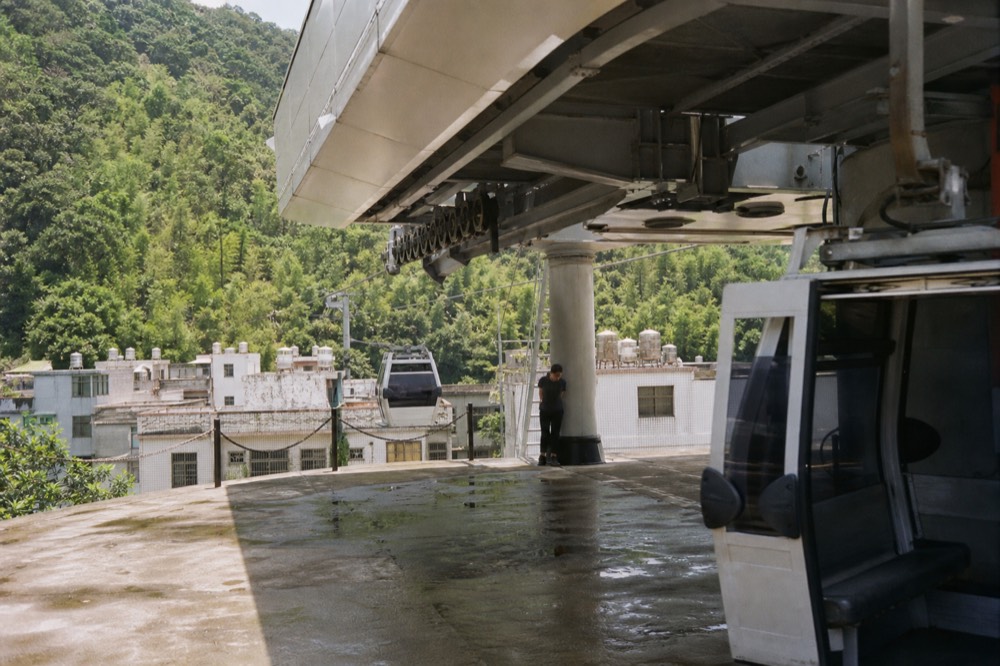
Taipei Zoo Station is the lower terminus, sitting about 350 metres southwest of MRT Taipei Zoo Station along Xinguang Road Section 2, and it is where almost every rider starts. It uses a rotary turntable platform, and beside it stand the ticket machines, the information counter, a breastfeeding room in the service centre, free toilets and lockers available 06:00 to 24:00. The Taipei Zoo underground car park next door holds 150 cars.
The station is the practical heart of the line. The MRT Wenhu Line, the brown line, terminates at Taipei Zoo Station BR01, and from its exit the walk to the gondola station is four to six minutes. If you are driving, note the parking asymmetry: the car park charges NT$10 per hour on weekdays but NT$60 per hour on weekends and holidays between 06:00 and 22:00, a sixfold difference that makes the MRT look very good on a Sunday.
Fares are flat now, and this is the single most out-of-date thing in most online guides. Since 3 March 2025 a single journey in a regular cabin costs NT$180 regardless of how many stations you ride, and a one-day pass costs NT$300. The old NT$70, NT$100, NT$120 by-station scale is dead. Children aged 0 to 5 ride free with a ticketed adult, up to two per adult, and the chartered-cabin add-on is NT$600 per cabin per trip.
Worth leaving the cabin for: the zoo itself, obviously. General admission is NT$100, hours are 09:00 to 17:00 with last entry at 16:00, and the gondola's Taipei Zoo South Station actually sits beside the zoo's inner grounds, which sets up a neat mid-route entry. The Taipei Zoo combo guide covers how to pair the two.
What Is At Taipei Zoo South Station?
Taipei Zoo South Station is the second passenger station, sitting beside the zoo's inner grounds, and it exists mainly so zoo visitors can join or leave the gondola mid-route without walking back to the main entrance. It has a lateral side platform rather than a turntable, and it is the quietest of the four stops because most riders stay in the cabin through it.
For most people the station's value is strategic rather than scenic. Ride the gondola up from the main station, hop off here on the way down, and you land inside the zoo near the bird and insect areas rather than at the front gate. In reverse, finish the zoo and board here to ride up the mountain, skipping the walk back down to the terminus. Note the terminal-station rule from earlier still applies to single-journey tickets: with a day pass you can exit and reboard, with a single ticket you cannot re-enter.
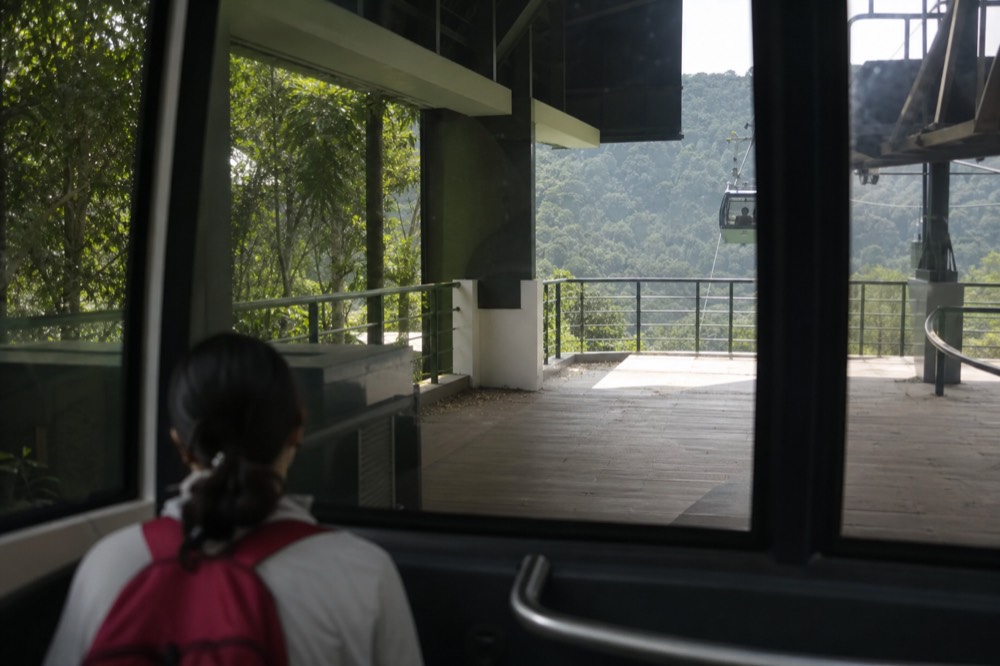
Between this station and Zhinan Temple Station comes the second angle station, the one carrying the drive system on the platform above it. This stretch is where the line makes its big turn, and the terrain changes character here too: the city-facing slope of the zoo gives way to the tea-hill side of the ridge. Keep your eyes forward and right through this section if you have a window seat.
What Is At Zhinan Temple Station?
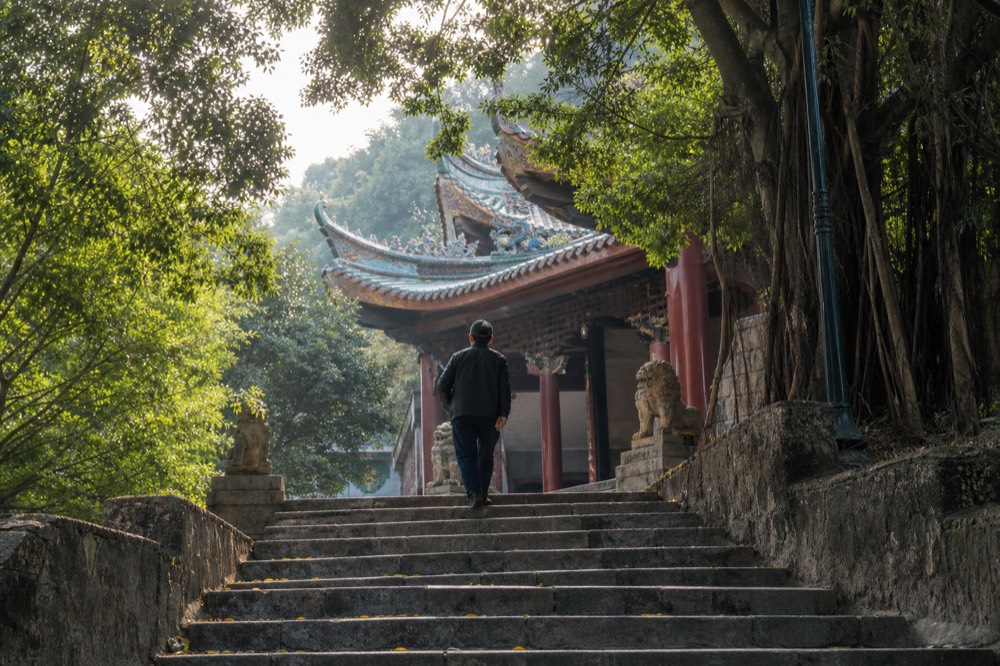
Zhinan Temple Station is the third passenger station, serving the Zhinan Temple complex on Houshan, also known as Monkey Mountain, whose main peak carries a Class 4 trig point at 553 metres. The station has a lateral platform, and from it a short paved path and trail lead up toward the temple complex, with some routes involving stairs. The temple's principal deity is Lü Dongbin, one of the Eight Immortals, and the complex blends Taoist, Buddhist and Confucian halls.
This is the station that most rewards hopping off, provided you hold a one-day pass. Zhinan Temple was founded around 1890 to 1891, and the historic stone staircase from the base at Lane 33, Section 3, Zhinan Road climbs 23 flights totalling 1,185 stone steps, usually rounded to about 1,200, rebuilt in 1936 with Japanese-era stone lanterns and benches along the way. The climb from the base takes roughly 30 to 40 minutes on foot, though the gondola spares you nearly all of it.
One current event needs stating plainly. On the evening of 24 August 2026 a fire severely damaged Lingxiao Hall, the six-storey hall completed in 1966, destroying much of its first floor and part of the second, about 1,500 square metres in total, with no injuries. Restoration is expected to take at least three years and more than NT$100 million. The rest of the temple complex remains open, with some rituals relocated to other halls, so a visit is still worthwhile, but do not go expecting Lingxiao Hall itself. The full story is in the Zhinan Temple guide.
There is also a legend worth defusing. The old story says couples who visit together will break up, because Lü Dongbin begrudges lovers their happiness. The temple's own cultural centre disputes this: Japanese-era songs record couples praying here for enduring love, and the temple's position is that an immortal would not begrudge anyone's happiness.
What Is At Maokong Station?
Maokong Station is the upper terminus, at roughly 311 metres elevation per secondary sources, with a rotary turntable platform and the tea houses, trails and viewpoints that are the reason most people ride up. A new observation deck, Sky Green, opened at the station in early January 2026, giving an open view over the whole Greater Taipei basin day and night, and beside the welcome wall stands a LOVE sculpture built from the gondola's own decommissioned steel haul rope.
The station is a destination in itself now. Sky Green is a 2026 addition that almost no English guide has caught up with, and TRTC names it as a headline reason international visitors come up the mountain. The LOVE installation, made from retired haul rope, is a couples' photo spot with a meaning the operator spells out: true love grows better with age.
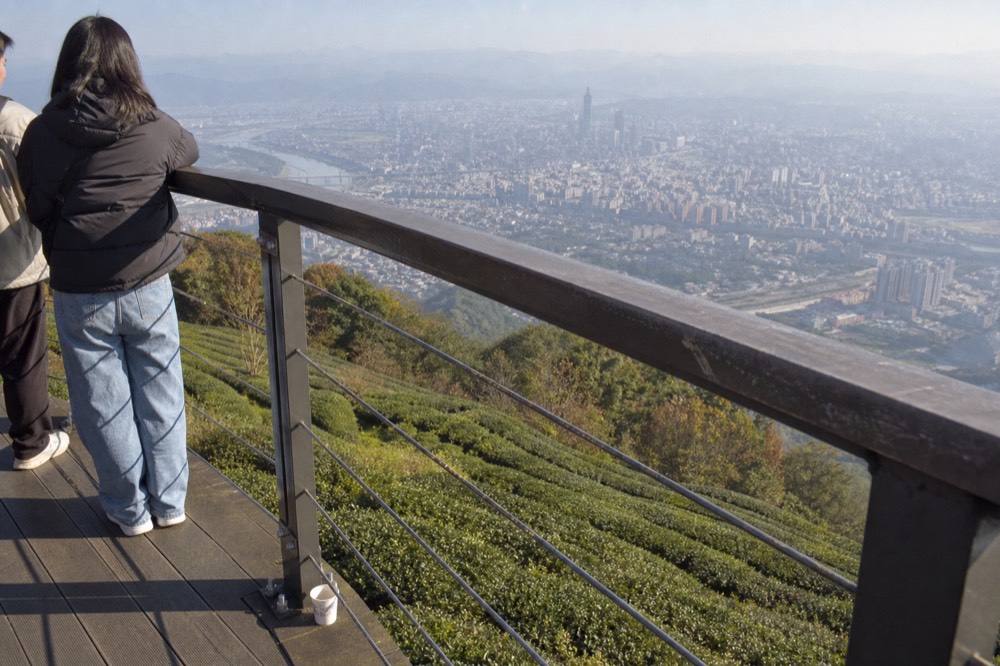
Out of the station, the hillside takes over. Turn left and the Circular Tea Trail reaches the Taipei Tea Promotion Center in about 15 minutes on foot; the centre is open daily 09:00 to 17:00 and closed Mondays. The tea story here is genuinely good: Muzha is the only place in Taiwan that cultivates Tieguanyin, from twelve seedlings tea master Chang Nai-miao carried from Fujian in 1895, and the hillside teahouses serve it by the pot all afternoon.
The trails fan out in every direction, and the operator's own trail pages give exact figures: the Camphor Tree Trail is about 1.5 km and 30 minutes one way, and it is Taipei's first fully level trail; the Denggao Trail is 70 metres long, the shortest in the area; Little Sky Trail is about 250 metres of elevated boardwalk. The hiking trails guide has the full set.
| Station | Get off for | Realistic stop time |
|---|---|---|
| Taipei Zoo | Taipei Zoo, MRT connection, parking | 2 to 4 hours for the zoo |
| Taipei Zoo South | Mid-route zoo entry or exit | Whatever your zoo visit needs |
| Zhinan Temple | Zhinan Temple complex, stone-step trailhead | 45 to 90 minutes |
| Maokong | Tea houses, Sky Green deck, trails, tea centre | Half a day or more |
Getting back down deserves one line of caution. The Maokong Tour Bus Right Line, free to gondola passengers on the same day, runs its last three departures from Maokong Station at 19:00, 19:30 and 20:00 sharp, and nothing after that. If you stay for the night view from Sky Green, the gondola itself is your ride down, and it stops at 21:00 on weekdays and 22:00 on weekends.
Which Maokong Cable Car Station Should You Get Off At?
Ride to Maokong Station first, then work down: that is the pattern that fits almost every itinerary, because the top station holds the tea houses, the new Sky Green deck and the trail network, while Zhinan Temple Station is the one stop where a mid-route hop-off genuinely pays. Taipei Zoo South Station only matters if the zoo is on your list, and the zoo deserves at least two hours on its own.
The one-day pass is what makes this flexible, and it is the ticket this site recommends for anyone planning more than a single up-and-down ride. The pass covers unlimited rides on the day of activation across all four stations, so you can ride to the top, walk down through the trails to Zhinan Temple, reboard there, and finish at the zoo, all on one ticket. The operator's own one-day pass costs NT$300; the ticket sold through the live listing is the same product, an open-dated voucher valid 180 days with instant confirmation, from about $9.49.
Two things decide which stations earn a stop. First, the day of the week: the system is closed most Mondays for maintenance, but the exact Mondays vary month to month and only the operator's published calendar is reliable, so check it before you commit. Second, the weather: the line suspends for wind gusts of 16 m/s or more, for lightning anywhere along the route, and for typhoon land warnings covering Taipei, and the weather and suspensions guide explains what happens to your ticket when it does.
The crystal cabin question also affects station choice, in a small way. The glass-floor cabin is not a separate ticket option on the live listing at all: it is an on-site upgrade of NT$50 per person per trip, added to whatever you already hold, with a maximum of five passengers per cabin. Because only 31 of the 147 cabins are crystal, the crystal queue is the long one, and the operator recommends its online booking system to secure a time slot.
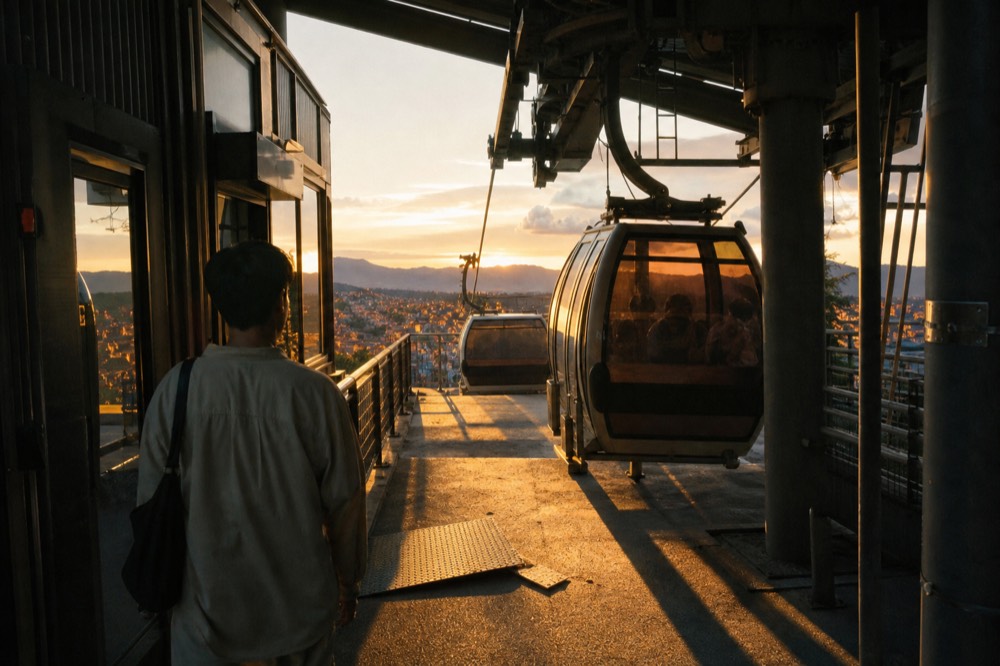
For a single-product line, the choices add up quickly, and the three options below cover the day pass, the zoo pairing and the bundled-experience version.
The four Maokong Gondola stations, in order, are Taipei Zoo, Taipei Zoo South, Zhinan Temple and Maokong, with two closed angle stations between them where the line changes direction. The questions below cover the order, the turn, the ride time, and which stops reward getting off, with the answers drawn from the operator's own published material throughout.
Common Questions About The Cable Car Up To Maokong Stations
What Are The Maokong Gondola Stations, In Order?
The four passenger stations in order are Taipei Zoo Station, Taipei Zoo South Station, Zhinan Temple Station and Maokong Station. Two closed angle stations sit between them: Angle Station 1 between the two zoo stations, and Angle Station 2 between Taipei Zoo South and Zhinan Temple.
Where Does The Maokong Gondola Route Actually Turn?
The route turns at the two closed angle stations, not at Zhinan Temple as commonly believed. The first bend is between Taipei Zoo Station and Taipei Zoo South Station, the second between Taipei Zoo South and Zhinan Temple. The drive system sits on an elevated platform above Angle Station 2.
How Long Does The Full Ride Take?
About 20 to 30 minutes from Taipei Zoo Station to Maokong Station, depending on the speed the system is running, and up to roughly 37 minutes in slow running. There is no timetable; cabins circulate continuously.
Can You Get Off At Zhinan Temple And Reboard?
Only with a one-day pass. Single-journey tickets require you to exit at a terminal station, Taipei Zoo or Maokong. Day-pass holders exiting at Taipei Zoo Station must hand the ticket to staff for a stamp to re-enter.
Which Station Is Closest To Taipei Zoo?
Taipei Zoo Station is the lower terminus, about 350 metres from MRT Taipei Zoo Station, but Taipei Zoo South Station sits beside the zoo's inner grounds and is the better mid-route entry if you are coming down from Maokong.
What Is At The Top Of The Maokong Gondola?
Maokong Station, at roughly 311 metres, with the Sky Green observation deck opened in January 2026, a LOVE sculpture made from retired haul rope, tea houses, the Taipei Tea Promotion Center about 15 minutes' walk away, and the trail network including the level Camphor Tree Trail.